2024 Annual Report

Council Holds Inaugural Aquaculture Training Course In Turkey

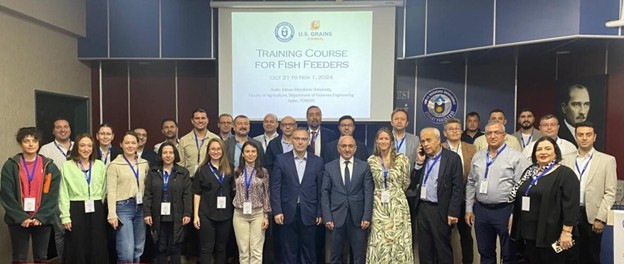
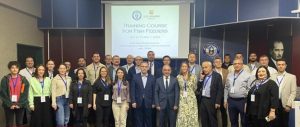
In October, the U.S. Grains Council (USGC) co-organized a training course for aquaculture producers at Aydin Adnan Menderes University (ADU) in Turkey as a result of a memorandum of understanding (MOU) signed between the Council and the university.

The MOU was signed in June with the goal of creating a regional training center for aquaculture to improve farming operations across Europe, the Middle East and Africa (EMEA). Courses explore best practices for aquaculture production, including the use of distiller’s dried grains with solubles (DDGS) and corn fermented protein (CFP).

“This is the first of several aquaculture training courses the Council will hold in Turkey and it’s extremely encouraging to already see such strong interest in the program from the local industry,” said Ana Maria Ballesteros, USGC deputy regional director for Europe and the Middle East. “Industry awareness of nutritious diet ingredients like DDGS and CFP has increased in the past several years but still presents a significant growth opportunity in Turkey, the sixth largest importer of U.S. DDGS in marketing year 2023/2024.”

Attendees included 20 key Turkish aquaculture stakeholders that constituted 90 percent of the country’s total production.

The seminar began with welcoming addresses from Council and university staff as well as a representative from the U.S. Department of Agriculture’s Foreign Agriculture Service (USDA’s FAS) to provide an overview of the agenda and focal points for the training sessions.

Lectures from university staff dove deeper into the benefits of DDGS and CFP in fish diets and explained how to properly source, store and apply them in aquaculture facilities. Participants then worked on practice courses to reinforce the habits and knowledge imparted to them from the expert speakers.

“I would like to extend the Council’s appreciation to ADU and its faculty for hosting this training seminar and for its assistance in planning future iterations to strengthen the Turkish and regional aquaculture industries and generate new feed demand,” Ballesteros said.
Council Works To Make Inroads For DDGS In India

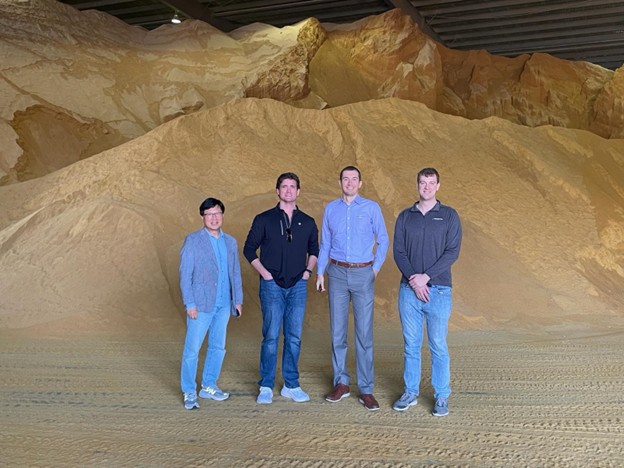
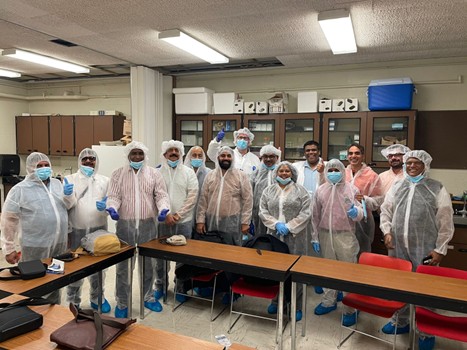
In July, the U.S. Grains Council (USGC) took another step towards tapping into the market potential of the world’s most populous nation by escorting a group of Indian food and beverage industry leaders on a tour of U.S. farms, ethanol plants and research facilities.

“The Council is making a committed effort to expand market access for U.S. agriculture in India. There is particularly significant interest from Indian animal feed producers in incorporating distiller’s dried grains with solubles (DDGS) into cattle and poultry diets to boost protein and fiber content,” said Reece Cannady, USGC regional director for South Asia. “Participants were able to learn about DDGS production and applications and the advantages of using U.S. corn in animal feed and ethanol processing.”

On July 22, Cannady and USGC Senior Ethanol Advisor Sonjoy Mohanty led the group on a tour organized by the Northern Crops Institute, an education and research facility in Fargo, ND, to begin the agenda with an overview of how crops are grown in the region and later processed into ethanol and DDGS. The next day, attendees learned about U.S. agriculture’s sustainability practices and saw them firsthand at a local farm.

The team toured an ethanol plant and met with a fuel distribution company to see how ethanol is produced and blended into gasoline before stopping at a retail fuel station to observe consumer behavior at the pump and understand ethanol’s compatibility with road vehicles.

The delegation then traveled to Minneapolis, MN on July 25 to meet with representatives from a local farming cooperative. The itinerary also included a visit to the University of Minnesota, that houses dedicated facilities for ethanol research and poultry diet tests and analysis. Professors there offered presentations to the Council’s group about the benefits of supplementing animal diets with DDGS.

The program concluded with a tour of a local grain elevator, feed mill and dairy operation to show participants how crops are transported and integrated into dairy cattle rations.

“We had a very diverse group join us on this trip, ranging from animal feed producers to brewers and distillers, all interested in how U.S. agricultural goods can increase their efficiency and profits,” Cannady said.  “U.S. DDGS improve livestock health and create higher-value products, and I’m excited to help develop a market for corn and corn co-products in India as it continues its rapid economic growth.”

U.S. Grains Council Promotes DDGS and Corn Fermented Protein Across Asia

In April, the U.S. Grains Council (USGC) organized two major marketing conferences promoting U.S. corn fermented protein (CFP) and distillers’ dried grains with solubles (DDGS) in South Korea and Taiwan. Both countries are already important trade partners for U.S. agriculture but still have significant opportunities for growth in CFP and DDGS exports through increasing interest from the animal feed and aquaculture industries in the region.

USGC Manager of Global Trade Jace Hefner arrived in Taipei, Taiwan on April 24 to meet with USGC Taiwan Director Michael Lu and review the latest Taiwanese market information in preparation for the next day’s conference.

“Taiwanese importers and U.S. producers enjoy a strong relationship that results in billions of dollars in sales each year, but the Council and its partners are still working to find avenues to new buyers and introduce different uses to consumers to build an even stronger bond between the U.S. and Taiwanese industries,” Lu said.

On April 25, Hefner and Lu visited Charoen Pokphand Enterprise, Taiwan’s leader in poultry integration, to speak with its international trade department about the superior quality of U.S. corn in poultry diets and market outlooks for U.S. corn and DDGS.

The Council’s Symposium of U.S. Corn Products’ Application & Sustainability began later that day and after an introduction from Erich Kuss, chief at the U.S. Department of Agriculture’s Foreign Agriculture Service Office in Taiwan, Hefner presented on U.S. corn’s superior performance in animal feed rations and spoke on a panel addressing the sustainability efforts of U.S. producers.

Hefner continued to Seoul, South Korea for the Council’s DDGS & CFP Trade Conference on April 30 where three U.S. CFP and DDGS suppliers – The Andersons, Green Plains and International Feed – participated in panels and presentations. The Council organized the conference to introduce high-protein CFP products to the Korean market, which is already the second largest importer of U.S. DDGS, to continue expanding exports to the country. The U.S. producers spoke to the 80 feed industry buyers and research personnel in attendance on the excellence of their products and market and logistics outlooks, and in the afternoon spent time in one-on-one consultation meetings with buyers.

“South Korea is among the top seafood-consuming countries in the world and its aquaculture industry is expanding to meet the demand,” Hefner said. “Putting U.S. DDGS and CFP producers and exporters in the room with South Korean buyers will undoubtedly increase awareness of how these feed additives improve yields and generate future sales as a result.”

The morning kicked off with a presentation on CFP’s characteristics and applications in swine diets and a panel discussion that included Hefner and USGC Director in Korea Haksoo Kim.

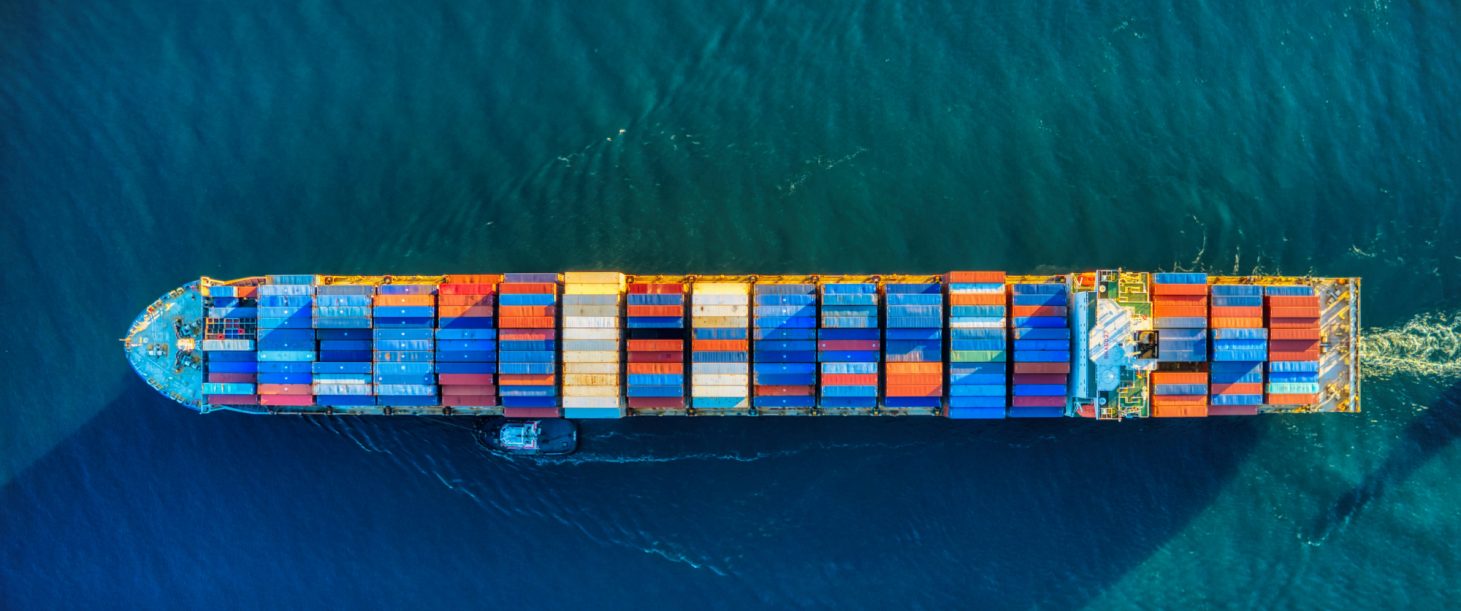
The event concluded with a visit to an eel farm in Gochang, South Korea to learn about the possibility of supplying CFP products for aquaculture feed and a tour of the container unloading and storage processes of U.S. DDGS and CFP products at Gwangyang Port, where 80% of DDGS imports arrive in South Korea.

“Approximately 2,000 tons of CFP products were imported into the Korean market in the first quarter this year, a first for the country,” Kim said. “I expect this to increase to over 100,000 tons within the next few years and U.S. CFP products have the potential to compete with South American soybean meal in aquaculture, broiler and piglet feed.”